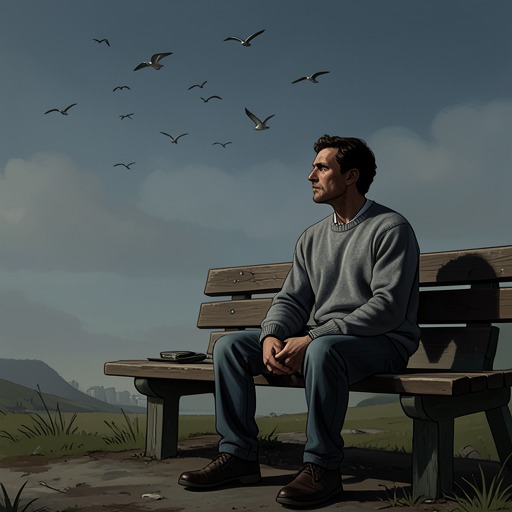
Isaac throws his knife into the river
American RustIsaac throws his hunting knife into the Mon River during his return toward Buell, turning a long walk home into a quiet break with the past. After nearly twenty miles on foot from Little Washington to Speers, with eight miles still to go, he leaves the knife behind and chooses to continue as a person among the living rather than carry the old weapon forward.
The Walk Back
Long after dark, Isaac has walked all day from Little Washington to Speers. Buell is still eight miles away. On the I-70 bridge, he pauses to look out over the Mon River, then descends toward the train tracks. The journey is measured in miles and ordinary forward motion: there is no sudden rescue or confrontation, only the distance he has already covered and the distance still ahead.
The Knife and the Encounter
Under the highway, Isaac passes a group of teenagers. One begins to say something, then falls quiet; Isaac realizes they have seen the hunting knife at his belt. He does not confront them. Once he is out of sight, he undoes the knife and tosses it into the river without ceremony. The encounter makes the weapon visible as more than equipment: it has become a sign by which strangers assess him, and Isaac responds by removing it from his life.
Renunciation and Continuance
The narration frames the disposal as a renunciation of the old ways, while resisting the idea that change must arrive as a grand declaration. Isaac's next choice is smaller and more immediate: to put one foot in front of the other. The knife goes into the river; he keeps walking. The scene therefore makes the act of relinquishing violence inseparable from continued life, presenting survival not as a completed transformation but as a choice renewed through movement.